Pages

Showing posts with label technology. Show all posts

Friday, January 12, 2018

King of Challenge Event: Hell Mode


The first integrated challenge missions in Gumballs & Dungeons have just been released. The aim is to beat three different dungeons without using any soul-links.

Yep, solo runs!

The first two are fairly easy, with the Three-Eyed King and his faithful hound being able to steamroll both the Adventurer's Forest F40 and Hero's Village F70 with impunity.

The last mission - to reach Lost Temple F100 - requires a bit more legwork.

Okay, a lot more legwork.

The Dungeon
Lost Temple is an elemental-filled dungeon, the most dangerous being the Earth elemental with its Reflect ability. These creatures provide crystals when slain, which in turn power the dungeon's main gimmick - the Elemental Altar.

The Team
There is no team. Literally.

To be eligible for the prizes, Soul-Links were restricted. There are probably better choices for a solo run, but I went with Sorcerer (Main) anyway. The ability Quantum Mechanics provides the cat Azrael - a pet that grows stronger every time it is killed and revived for a minimal amount of EP. Sorcerer also transcribes Blind scrolls every other floor, which turned out to be surprisingly valuable in the last twenty floors.

Equipment
Bring the Necklace of Legendary Mage +6. I didn't know what to choose for the potion, so I took Cabala which provides some power and a small chance to double a spell's damage.

Strategy
There are no other title paths apart from the Magic tree, so upgrades are very straightforward:
Magic Apprentice (3*), Black Robe Mage (3*), Conjuror (3*), Earth Master (3*), Legendary Mage (MAX).

Keeping Azrael alive is key, as his main purpose in the lower floors is to take out enemies and help save up as many scrolls as possible. In the later floors, he acts as a damage sponge.

Prioritization is key in completing the challenge. EP expenditure must be prioritized in this order: spell scrolls, 100 EP reserve for reviving Azrael, title upgrades. Always take stat boosts by offering same-color crystals at the Elemental Altar.

On the other hand, enemies must be beaten according to this priority: Rock Golem (ranged attacks), Water (healing), and then everything else.

The boss is (thankfully) lackluster, as it only attacks every three rounds without doing much else. Switch between Electrostatic Fields, Disrupting Rays and Icicles as needed, while keeping Stoneskin and Ice Armor up to mitigate damage rounds.

Blind and Curse will help defeat enemies in the later stages, so make sure that every spell is bought out when shops are spawned. Spellbooks (especially Air) are very handy - keep these equipped because free spells are always good and every single bit helps. I ran out of mana and scrolls at F100, with the last Lightning Bolt barely managing to kill the boss.

Pros
I don't think there are any pros, apart from the satisfaction of finishing the challenge with a terrible gumball.

Cons
Sorcerer is probably one of the worst gumballs, second only to Prince. Multiply that with a solo run and it's a recipe for disaster.

Final Thoughts
Use High Priest instead.

Friday, November 17, 2017

Bring Down The Sky: The Busy Person's Guide to Erathia


I have a love-hate relationship with mechanical maps in Gumballs & Dungeons, which happen to be the majority of the latest maps released in the game. On one hand, they're great because they're just steeped with content. On the other, progress takes a ridiculous amount of effort to set up - and runs take a few hours at a minimum to complete.

That's not necessarily a bad thing, to be honest. It just doesn't work for folks who are otherwise preoccupied with stuff from the dreaded real world. 

This guide provides details for the build I used to complete 80dp for Erathia. I intend to raid the map for the Raptor frags, because ain't nobody got time for that.

The Dungeon
Erathia is a mechanical dungeon. Like City of Steam, Spaceship Ruins and Avalon Fortress, your progress is heavily dependent on completing a Manual -  an inventory item that several upgrades that grants bonuses and skills to help beat the map.

This is extremely important as all enemies in Erathia offer some sort of resistance, as well as sport some nasty abilities like the dreaded Reflect Damage. No pet shenanigans here!

Please note that this guide will not provide steps to complete the dp quests. There's already an excellent guide for that, so check it out.

The Team
Future Cat (Main) is arguably one of the most powerful gumballs that exists - and it's free! Its ability is the Dimension Bag, a piece of equipment that generates an assortment of items which are very helpful for deep dungeon runs. From stat boosters, to consumable Timestills, to theft items and free wicks, this homage to Doraemon is always a top pick for lengthy runs. The cherry on the cake? The Manual starts with Dashboard Structure Principle at max level when Future Cat is selected as Main, providing players with 6% HP regen right out of the gate!

Gang Cadre (Soul-Link 1) sports the ability Blackmail. The bane of all shopkeepers in the Gumball universe, he has the ability to rob shops blind for any items in their inventory - and then some! Erathia's Manual requires a ton of components to upgrade, and any wise player will be glad that this gangster is on their side.

Lastly, we have the good ol' Allfather himself, Odin (Soul-Link 2). Eternal is useful as ever, providing a whopping 40% bonus to all spells cast.

Equipment
Erathia literally provides all the equipment a player will need to kick ass. The Dimension Bag takes the Treasure slot while sharing it with the Harp of the Adventurer +6 for those sweet EP discounts.

Cactus Juice will help manage reflect damage until the appropriate Manual upgrade is found.

Strategy
Titles needs to be built up in this order: Treasure Seeker (1*), Explorer (1*),  Night Walker (1*), Magic Bandit (3*) and Farplane Ranger (0*). This provides maximum EP cost reduction as early as possible.

The next focus is survivability. Take Novice Warrior (3*), Knight (3*) which provides a hefty HP bonus for that sweet regeneration ability from the Steam Power Belt.

Next, take Magic Apprentice (3*), Black Mage (3*), Conjurer (1*), Earth Master (3*), Planar Prophet (MAX). Afterwards, work on the Heavy Armor Knight upgrade path for even more survivability, while saving the Light Paladin heal for dire circumstances.

You can choose where you spend EP afterwards. Just remember that there seems to be a conflict between the final Melee levels of the Dragon and Mech titles, so try to pick one over the other in the rare chance that you get them both.

For Manual upgrades, you can improve the four paths simultaneously, with the only common resource between them being Ancient Elements.

For Metallurgy, build the belt first for the regeneration ability. Build the helmet and maximize Burnishing and Polishing of Lens for bonus upgrade fragments throughout the run. Build the rest of the equipment set, and try to upgrade the tree as follows:

Precise Clockwork Spring Manufacturing (blocks counterattacks)
Aufbau Principle of Screw Conveyor (decrease ranged damage)
High Alloy Smelting (provides defense)
HP Upgrades
Attack Upgrades
Center Upgrades

For Electrical Science, it is important to build the equipment set as early as possible to take advantage of the free spell scroll every floor. For upgrades, try the following order to maximize those Portals of Earth:

Electromagnetic Deflection Technology (+dodge)
Magnetic Field Generator (boosts aid spells)
High-Voltage Shock Device (boosts damage spells)
Transistor Manufacturing and Maintenance (boosts healing spells)
Center Upgrades
Everything Else

I don't bother much with the Aeronautics tree - my airship is good enough to not need any upgrades and I just upgrade the tree when I have a ton of components available. If ship upgrades are needed, try to focus on the stats portion of the tree. If you're trying to complete the hidden airship sidequest, try to upgrade the lower right portion of the tree, which increases the drop chance of satellite fragments when they're shot down by your airship.

The Ancient Technology tree is perhaps the most interesting section of the Manual - and it's what sets Erathia apart from the other dungeons. It is very important to note that there are more options for upgrades than there are slots, so choose carefully. Some upgrades focus on combat while others focus on support (like increasing engineering component drops), so it's a matter of preference for the player.

Erathia's boss isn't too difficult, even while doing the 'no Manual upgrades until F50' and 'no destroyed satellite' subquests. I find that an effective strategy is to buff with Electrostatic Field, throw in a Disrupting Ray at higher levels and hit it with an Icicle. If the boss lives, a couple Fireballs or Lightning Bolts will usually finish it off. Just make sure that you start the fight with an airship attack (if you're not doing the aforementioned quests above) and you're golden. As a side note, I find that the higher level bosses at F70 - F100 melt easily using Electrostatic Field, Disrupting Ray and Blade of Ruin, while under the protection of Timestill. The Mech title speeds this up even faster, especially with a maxed out Manual providing silly bonuses to the two equipment sets.

As a final note, the key to completing Erathia is to run through as many floors as possible. Between two Portal of Earth scrolls, a portal Opticus, and Future Cat's Time Machine, a decently prepared player will be able to traverse a whopping 280 floors - or get bored trying!

Pros
This team is a toy factory. Erathia's Manual is also a toy factory. Toys for days!

Cons
Gang Cadre is not a free gumball, but is otherwise easy to unlock.

Erathia is a late game map and may require a bunch of passive abilities from a sizeable gumball collection.

Final Thoughts
This build was designed to squeeze as much gameplay in a single Erathia in as few runs as possible to complete 80dp.

However, do note that as of writing it's been less than a week since the map's release and there will likely be more efficient ways of completing the map as more people play through it.

Monday, September 18, 2017

Project Poseidon: Arena Not-So-Speedfarming in Gumballs & Dungeons


This post is slightly inspired by Arananthi's post, which shows how effective Dark spells can be when it's set up correctly.

This build also showcases the result of stacking obscene amounts of spell effect bonuses.

The Dungeon
This build will use the Arena as it remains the best gold farming location after the latest update. Furthermore, the F95 goal is always a great litmus test for any competent gumball team.

The Team
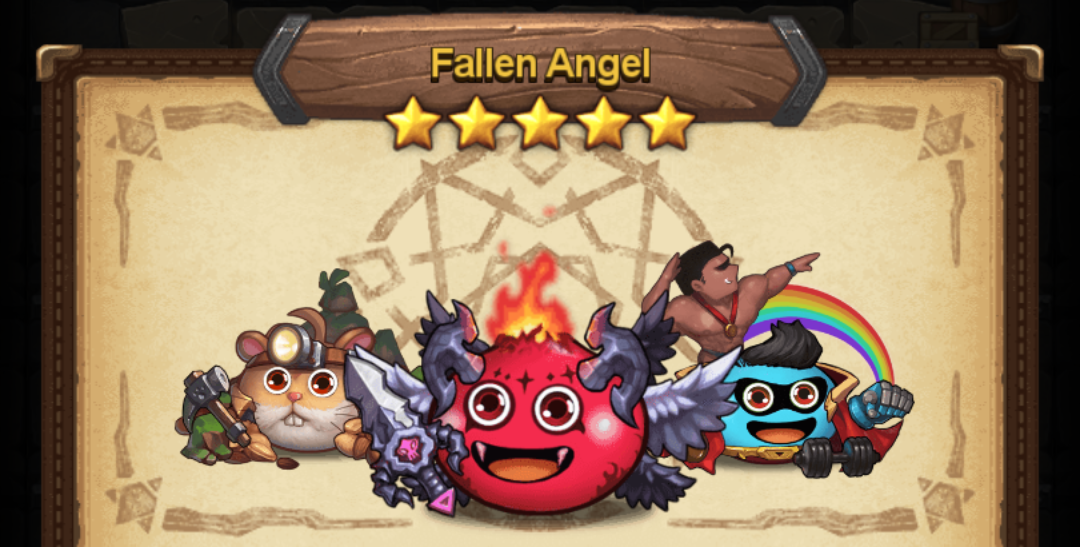
Fallen Angel (Main) is an oft overlooked gumball, if only because Canas presents a ton of amazing Magic-type gumballs in its roster. The Light and Darkness ability enhances any Light and Dark spells by a whopping 60% - a fantastic buff to some of the most useful crowd-clearing spells in the game such as Death Ripple as well as clutch heals like Divine Favor. When used as a main, Fallen Angel provides a Death Ripple scroll every other floor to ensure a steady supply of nasty firepower until the end. Using this gumball as a main also gives access to the first three tiers of the Demon title, thus granting significant Power bonuses (via Little Demon) at the tail end of the run.

Justice Herald's (Soul-Link 1) Steel-Like Body provides a passive +5 Defense and 15% HP recovery per floor. This greatly increases survivability in the dungeon's higher levels. This is a personal choice due to the ease-of-life benefits that the gumball provides - feel free to substitute any Melee gumball as preferred.

Hamster's (Soul-Link 2) Hoard provides the same main ability as Spy which lets players ignore slate guarding by enemy monsters. This is especially useful in higher floors where one might need to conserve spell scrolls by opening all slates before unleashing a singular devastating Death Ripple to clear everything in one shot. Hamster also has a 30% chance to create food each floor, which mostly provides permanent stat bonuses throughout the run. Over 90+ floors, these bonuses can add up pretty quickly.

Equipment
Take the Gloves of Dark Arbiter +6, as well as the Mixture of Light and Dark.

Strategy
Upon entering the dungeon, max the Treasure Seeker title.

Before F5, try to fill in the Magic Title as follows: Magic Apprentice (1*), Black Mage (1*), Conjuror (1*). This should help you have more than enough Death Ripples to easily clear the first Arena Fight.

Throughout the dungeon, work on the titles in this order: Dark Master (3*), Black Mage (3*), Dark Priest (0*), Conjurer (3*), Magic Apprentice (3*), Dark Priest (3* Power), Novice Warrior (1*), Warrior (1*), Magic Warrior (1*), Shadow Warrior (1*), Dark Arbiter (3* Attack, 3* Artifact Bonus, 3* HP, 3* Power - in this order), Dark Priest (3* MP, 3* HP), Fallen (1*), Inferior Demon (1*), Middle Demon (3*).

All other titles are optional after these - I prefer maximizing Power for my spells.

The titles provide incredible synergy for Dark Spells on top of having a very high Power stat. Two key spells will be buffed to incredible levels, summarized below:

Death Ripple
+60% damage (Fallen Angel ability)
+30% damage (Mixture of Dight and Dark with Fallen Angel bonus)
+40% damage (Dark Master)
+75% damage (Dark Priest)
+75% damage (Dark Arbiter)
+75% double damage chance (Dark Arbiter)
+50% double damage chance (Dark Priest)
+90% ignore resist (Dark Arbiter)
Total: +280% damage, +90% resist ignore, guaranteed double damage chance

Implosion
+60% damage (Fallen Angel ability)
+30% damage (Mixture of Dight and Dark with Fallen Angel bonus)
+40% damage (Dark Master)
+75% damage (Dark Priest)
+50% double damage chance (Dark Priest)
Total: +205% damage, +50% double damage chance

This does not take into account equipment bonuses, such as Nether Boots (+25% Death Ripple damage), Hades' Bottle of Soul (+30% Dark spell effects) or the Great Druid's Cloak (which provides a ridiculous +200% damage bonus for Death Ripple).

For scroll shops, stockpile the following spells as they're provide great utility throughout the run: Meteor Shower, Icicle, Earthquake, Electrostatic Field, Disrupting Ray, Divine Favor, Curse and (more) Death Ripples.

For the Depot, prioritize Burned Parchments and Eyeball Tinctures, in that order.

All the Arena fights can be dealt with via casting Curse or Icicle (as needed) followed by spamming Death Ripples to clear everything in the floor.

F30-40 bosses can be wrecked by Fireballs, Lightning Bolts and Meteor Showers, while the F50-60 bosses won't take more than a few Death Ripples to beat. F70-90 bosses can be slain using a combination of Disrupting Rays, Hexes, Implosions, and Burned Parchments.

Pros
All gumballs are available for free.

Perfect build for those who love arbitrarily large numbers.

Cons
Some skill (and focus) is required to ensure spell scrolls would last until the end of the run - not really a con for those who love the strategic aspect of the game.

Takes a bit longer than using the classic Howling team.

Final Thoughts
This build proves how versatile a properly built gumball team can be by providing a great alternative to free players for Arena farming.

Monday, July 17, 2017

Project Poseidon: Arena Speedfarming in Gumballs & Dungeons


Gumballs and Dungeons is a deceptively complex mobile game, with even more deceptively hidden features.

One of these is the Poseidon gumball, the second highest unlockable character next to Hades. As a Canas' Enlightenment player, Poseidon is a must have, but getting to the 38,000 point threshold for this Spending Returns reward will take some effort for non-whales like me.

The Dungeon
At an average of 120,000 gold per F95 run, the Arena is the best option for farming by a massive margin - up to six times more gold earned compared to other currently released dungeons. The most commonly used teams take an hour on average to complete this dungeon, which isn't ideal for players who are otherwise pre-occupied with real life.

The Team
Odin (Main) is arguably the best magic-class gumball. The Eternal ability enhances any spell being cast by 40% and extends effects by an additional round. When chosen for use as a main or link gumball, it provides a Electrostatic Field scroll every two floors. If used as a main, it also gives a free Timestill at the start of the run.

Three-Eye King (Soul-Link 1) provides the Sky Eye active skill, which damages all on-screen enemies based on the attack stat and reduces the defense by a considerable amount, allowing for devastating follow-up attacks. Even more important is that it carries the Oriental Paper Cutting when entering the dungeon. This single use item summons Howling, a pet often exploited for its scaling health and attack stats coupled with life leech and decent dodge rating.

Merchant's (Soul-Link 2) skill is Trading Master, which passively adds three more items to all Treasure and Scroll shops within the dungeon on top of a 25% discount. This allows for an easier time finding useful equipment and spells throughout the dungeon run.

Equipment
Bring the Necklace of Legendary Mage +6, as well as the Werewolf Potion.

Strategy
Upon entering the dungeon, focus on maxing out Treasure Seeker and Magic Apprentice. At this point, EP can be saved up for future use.

Buy all Disrupting Rays and Earthquakes from the scroll shops you come across. Similarly, purchase all Burned Parchment scrolls and Orc Livers from the Depot, prioritising them in that order.

For Treasure shops, try to buy pieces of the Noble Suit and the Hunter's Suit which will help in filling out the titles needed for the run. It's not really required, but try to buy Destroyer's Slate, Belt of Electric Arc and White Pearl if they come up. This helps in boosting some of the buff spells later on.

Do not disenchant treasure until the Blacksmith title has been maxed out.

For the Arena matches until F55, use Bless followed by Sky Eye to defeat the opponent and clear the audience easily. For bosses until F50, use Electrostatic Field, followed by Sky Eye and Lightning Bolt to beat them.

On F25, fill in the titles in this order: White Mage (1*), Priest (1*), Air Master (3*), Legendary Mage (0*). This should help in clearing bosses and Arena matches until the the rest of the build is complete.

The next goal is to forge (or find) an Earth Spell Book using Holy Blacksmith. Fill in the Venture title as follows: Explorationist (1*), Blacksmith (3*). As soon as the Blacksmith title has been maxed, start disenchanting unused treasure for extra EP and Quenching Essence. Continue titles towards Royal Blacksmith (1*) and Holy Blacksmith (3* HP). Before F60, there should be enough Quenching Essence for the Earth Spell book. Equip it at this point to amass Earthquake scrolls.

If all goes well, there should be enough EP to fill in the Melee titles: Novice Warrior (1*), Knight (3*). Legendary Mage (3* HP, 3* Power) should be maxed as well before F60.

The titles above should provide Howling with a decent HP pool to last until F95. He should be summoned using the Werewolf potion trick to maximise stats. Typically, Howling should have 1200 HP and 1400 Attack (for Bless) or 2400 Attack (for Blade of Ruin).

At this point, EP can be freely spent. I always fill in the rest of Legendary Mage for free Timestills and extended spell duration, then focus on boosting HP from then on.

Howling should be able to clear everything easily with minimal help. The next checkpoint is the F80 boss. To defeat it, cast Timestill - which should last for ten turns - followed by Electrostatic Field, Disrupting Ray and spells of choice for an easy win. If there are more than five Burned parchments in inventory, these can be used in place of spells to one-shot the boss.

Watch Howling's HP on the next floors as the enemies will start hitting considerably harder. If he enters a floor with low HP, cast Earthquake to speed-clear the floor without enemy counterattacks. This trick should allow for fast-clearing floors all the way to F95 (or beyond).

At the F85 Arena match, Timestill should last for a whopping 23 turns.

At the F90 boss, cast Timestill, Electrostatic Field, Disrupting Ray and Burned Parchments for another easy win.

At the final Arena match in F95, cast Timestill and throw everything at the Spartan gumball. Clearing this will provide fragments, as well as upgrade the Champion's Certificate to give 100,000 gold upon exiting the dungeon. Hoorah!

Pros
This setup revolves around reliability, ease of living and speed.

The Titles provide a lot of safety nets, and allows for runs to be completed even in the (likely) scenario that Blade of Ruin does not drop before needing to summon Howling.

The setup also eliminates a lot of RNG-related factors that other builds may have.

Cons
The largest setback is the fact that Three-Eye King is not only an event gumball, but he has only been available once so far during the week of the Chinese Lunar New Year. So far there are no indications of the event returning until next year, but my theory is that the event would return on October in time for the Golden Week.

Odin is a gem-only gumball, but should be one of the first purchases with the many free gems that the game provides. It might be expensive to max his stats as well, but it's well worth it.

Final Thoughts
This is the quickest way I've found so far to farming the Arena for easy gold. With practice, it is possible to beat the dungeon in around 20 minutes without relying on luck. The biggest challenge is the availability of the Three-Eye King, but it should come back around in a few months time (as per the developer's hint).

Enjoy!

Wednesday, January 06, 2016

Until Dawn


The Gist
The quintessential horror movie that Hayden Panettiere should have starred in a long time ago.

The Story
On February 2014, a group of friends spent their winter holiday in a remote mountain lodge owned by their friends Josh and twin sisters Hannah and Beth Washington. A prank gone awry leads to the humiliated twins fleeing the cabin into a raging blizzard. Mysterious forces seemed to be afoot during that fateful night and the twins have never been seen since.

A year later, Josh invites the friends back into the same lodge in hopes of remembering the tragedy that has befallen his family and to provide some closure for the group. Little do they know what terrors the night had in store for them, or if all of them could last until dawn.

Gameplay Impressions
In a similar vein to the PS3 game Heavy Rain, Until Dawn is more like an interactive movie than a video game. The player controls each of the game's eight main characters throughout different chapters of the story, which provides a lot of dimension in terms of how each of them sees their experiences during the course of the night.

Until Dawn introduces a system called the Butterfly Effect. Decisions made by the players affect how the story plays out both immediately and a few hours down the line, which in turn would affect the chances of each character making it out of the mountain unscathed. These decisions also affect both the characters' traits and relationships towards each other - something that players should keep track of during the harrowing events that the characters will go through. With the game offering multiple endings as a result of these decisions, there's a good chance that no two experiences will be similar.

A normal playthrough lasts for a good ten hours, which in my opinion is just the right length for games of this genre. The game makes use of a variety of environments that lend the story that distinct cinematic feel - the claustrophobic corridors of the lodge, abandoned mine shafts and a decaying sanitarium are just a few of the locales that the story explores. The hostile winter environment that encompasses all of these provide an ominous feeling of isolation. Combined with elements from Native American lore and classic thriller and horror movie elements, Until Dawn is bound to be etched in many players' memories for quite some time.

Verdict
For horror movie enthusiasts, I'd recommend giving Until Dawn a try - and I'd recommend playing it during one of those late and lonely nights for full effect.

Wednesday, September 09, 2015

Destiny: Year One

"And we're all out of bubblegum."

The Gist
Let's be honest here - Destiny's first year was an extended beta.

The Story (So Far)
Far beyond humanity's Golden Age, we are left at the brink of extinction.

The remnants of humanity have gathered at the Last City beneath its sleeping Traveler, surrounded by nothing but their foes from beyond the stars and protected by the Guardians and their Ghosts.

The Fallen are space pirates who pillage and scavenge the very same resources that we're fighting for. The Hive are grotesque spawn who are driven by their gods' bidding in their efforts to capture Earth. The Cabal are massive brutes from a highly militarized civilization who have placed a blockade on Mars. And the Vex are mysterious ancient machines whose presence turns planets into machines whose purpose remain incomprehensible.

It has been a struggle, but the Guardians are starting to see the fruits of their labors.

The future is bleak, but not hopeless.

They have conquered Atheon in the Vault of Glass, a labyrinth beneath the acid-scoured surface of Venus that the Vex have turned into an impossible machine that can bend the laws of time, space and reality.

They have slain a god - Crota, Son of Oryx - beneath the depths of the Hellmouth on the Moon. In doing so they have avenged the deaths of countless Guardians who have fallen against his foul blade.

And they have captured Skolas, the self-titled Kell of Kells, who has vowed revenge on the Awoken and their Queen and has threatened to unite the Fallen houses into another costly war against humanity.

At the end of the saga's first chapter, another threat looms at the edge of the Saturn - a massive ship from the dark recesses of space whose master has come to avenge his son's demise.

Gameplay Impressions
Destiny, at the surface, is a first-person shooter.  Players create a character and choose between three character archetypes - the brutish Titan, the agile Hunter and the enigmatic Warlock - to do battle against enemies that seek the end of humanity. In terms of FPS mechanics, it doesn't stand out among most modern titles - the controls are sharp, the gameplay is fluid and the story leaves a lot to the imagination at times.

What it does well is how it uses those mechanics in terms of multiplayer collaboration, both in player-versus-environment and a player-versus-player settings.

Besides the usual sandbox modes, story missions and glorified firefights (called strikes), what sets Destiny apart was its introduction of raids. A raid is a multiplayer game mode that provides challenges and puzzles that heavily emphasize communication among a group of six players in real time. I'd like to think that it is the pinnacle of console gameplay to date - one that has developed an online community whose main purpose was collaboration in real time across the globe.

I remember the first times I finished the Vault of Glass and the Crota's End raids. It was frantic because I knew that the other members of the raid team depended on me to complete the multitude of challenges we faces, yet it was also deeply satisfying because everyone was working towards a common goal - a feat that is ridiculously rare in gaming. The fact that we were guided by a female player proves the point that heavier games such as this no longer have a demographic that is dominated by the stereotypical basement dwelling males that the media tirelessly portrays.

PVP is just as strong a point, if not better than PVE. There are a lot of game modes like Clash (which is what most people know as team deathmatch) and Control (which is reminiscent of the Battlefield games).

The sun shines upon The Lighthouse.

However, Destiny's second expansion - House of Wolves - introduced the Trials of Osiris and provided a new outlook on player-versus-player combat in general. The Trials consist of nine best-of-five matches against other players. What makes it special was the fact that winning streaks provided greater rewards (and losing three to four times kicked you out of the Trials) and getting a perfect scorecard provided access to an exclusive area called The Lighthouse. This meant that the Trials were haunted by both the game's best players as well as the common folk who sought to best them in the quest to set eyes upon the hidden outpost in the Vex-held Mercury.

Personally, I managed to visit The Lighthouse on my first attempt at the Trials. I must admit that my two companions did most of the legwork, but getting to The Lighthouse was no small feat - it required careful teamwork, coordination and communication because of the knowledge that the opposing team sought the same rewards as ourselves.

Following Osiris' footsteps requires serious self reflection.

I've never been to The Lighthouse again after that first time, but I must say that getting those nine wins were probably the most stressful hour and a half in my time as a gamer. It is definitely not for the faint of heart, nor is it for those who are angered easily, but the experience was certainly different from any that I've had in the many years that I've picked up a controller to play.

Verdict
Destiny has shown a lot of potential in its first year even if Bungie wasn't able to live up to a lot of their pre-release promises. The game lends a fresh coat of paint to a genre that has grown stale over the years of mindless sequels and re-releases that we had to comb through.

Buy it - as long as it won't break the wallet.

Wednesday, February 04, 2015

Dragon Age: Inquisition

The Last Supper (c) Bioware
The Gist
Seventy hours of Thedas being saved by people of questionable morals (and taste).

The Story
The world, once again, lies on the brink of ruin. The events that unfolded in Kirkwall sparked a brutal war between the Circles of Magi and the Templars who were once tasked to protect them from themselves.

In an attempt to broker peace, the Chantry's Divine and her senior council arrange a peace conference between the mages and templars. Things don't go as planned as an arcane explosion kills everyone save for a stranger who possesses a strange mark on one hand and no memory of the past.

As Thedas plunges into its darkest hour, an ancient evil arises to take advantage of the ensuing chaos in an attempt to tear open the realm of the Maker and seize the god's empty throne. The land's last hope lies in the establishment of the Inquisition - an organization that seeks to rally the forces of Thedas against the looming apocalypse. With the Hero of Ferelden missing and the Champion of Kirkwall nowhere to be found, they turn to the stranger from the Rift to carry the burden of Thedas' salvation.

Gameplay Impressions
The story continues where Dragon Age 2 left off, with the inevitable war between the mages and templars being the backdrop that the game begins with. Staying true to Bioware tradition, players can import their choices from previous games as various 'World States'. This allows longtime players to walk in a world of their own making, from worlds full of light to one deemed as the Darkest Timeline - and everything in between.

Inquisition spans across two powerful regions. Orlais is a center of culture and extravagance reminiscient of Renaissance-era France. Ferelden, on the other hand, is a large region populated by everything from rolling fields to dense forests to swamps and moors seemingly representing medieval England. The overworld is a sprawling place, and players will spend countless hours trying to see every nook and cranny that Thedas has to offer.

Perhaps one of the strongest points that Bioware has going for the series is the fact that they are able to handle character orientations in a relatively mature manner. My World State has a male elven mage as the Hero of Ferelden (Dragon Age: Origins) who has pursued a relationship with Zevran Aranai, a male Antivan Crow. I also had a male mage Hawke as the Champion of Kirkwall (Dragon Age 2). While he pursued a relatonship with Merill, he was just oozing with sarcasm, much to the annoyance of his companions.

In Inquisition, I had a male Qunari mage as my Inquisitor and pursued a relationship with Dorian - a male Tevinter mage who was on a self-imposed exile from his homeland due to his sexuality (because why not go all the way). In all seriousness, I did not expect video games to handle this material very well. Much to my surprise, I was proven wrong - the way that Bioware presented Dorian's strained relationship with his father proved to be one of the game's strongest stories. His situation as a pariah was handled with maturity and taste that is rare in an industry notorious for its attitude towards such matters.

Sadly, that's just about all the praise I can tell about Inquisition.

While having varied environments is always a huge plus, there will be times when the game's world is too large for its own good. This is especially evident in the Hissing Wastes, a desert that is just about as sparse as one would find in real life. Everyone appreciates varied scenery every now and then, but creating a massive sandbox just for the sake of scale doesn't paint Inquisition in a positive light. It doesn't help that players will have to spend hours picking herbs and other miscellany, even if they're the head of one of the land's most powerful organizations and thus have countless underlings to do their bidding for them.

Gameplay controls are a combination of Origins and Dragon Age 2. While it shouldn't pose problems for players who prefer the action oriented playstyle of Dragon Age 2, Inquisition's controls provide an additional layer of difficulty for those who wish to micromanage their characters especially in the game's higher difficulties. A particular example is when trying to order someone to revive a teammate in the heat of battle, most of the time the character just runs off to their unconscious comrade and starts to resume attacking enemies. It's extremely frustrating since order queues were flawlessly implemented in the first game and were seemingly added as afterthoughts for Inquisition.

Another gripe to be found with the game is the War Table mechanic. The War Table is a hub where the Inquisitor meets with his council and assigns the Inquisition's resources towards cries for help from across the land, ranging from providing farmland with troops to guard it up to meddling in disputes regarding royal succession. In doing so, the player is awarded Power, which is a currency used to unlock further quests or open up new areas for exploration. In theory this should lend the player a feel of what it's like to manage an organization with such a hefty goal. In practice, however, it sucks.

While players won't be directly engaged in anything besides tapping a few buttons and selecting who fixes what, Bioware opted to borrow a page from Facebook games and decided to add timers to track the completion progress of these missions. They literally put countdown timers on missions that the player has no ability to affect - from five minutes up to a staggering twenty-plus hours. This is an incredibly counter-intuitive decision, given the fact that their target market would probably be people who work for a living and would have to set time aside to play their game.

It is the worst example of padding a game's length in recent memory. I've heard from a bunch of people that they've not gone through the rest of the content after finishing the story due to this design decision - something that I definitely agree with.

Verdict
Dragon Age: Inquisition is an attempt to try and please a larger audience as opposed to a long devoted fanbase.

While it is still a solid game, it is plagued by dozens of hours of busy work, unnecessary timers and an atrocious control scheme that are huge steps back compared to its predecessors. These faults greatly overshadow the vibrant world and extremely detailed codex that try to lend life to a rather empty world. Still, it's worth a playthrough for the story and I hope that the inevitable follow-up would fix the game's design choices.

Not Bioware's best outing to date - the experienced developer should play to their strengths in future efforts rather than try to become the next Elder Scrolls.

Monday, January 19, 2015

Zod and the Expendables: An Injustice Mobile Multiplayer Team

Raven Prime. Stupid Raven Prime.

This event-only card is probably one of my most hated ones out there, tied only by the equally annoying Killer Frost Regime (which is a different nightmare altogether).

Very few characters in Injustice are as centralizing as this blue crone. Her ability to swap health bars against her unfortunate enemies when she takes too much damage is often enough to turn the tables against unprepared players. To be able to do it twice is almost unfair.

Combined with her sick passive ability, Raven's specials deal a surprisingly huge amount of damage and sets her as potential nightmare match-ups even against the most seasoned players.

The Team
If this team has a motto, it would be: Slow and steady wins the race. The team starts out by playing defensively, and seeks to abuse Zod Prime's often overlooked ability by putting it in a combo with Aquaman's second special skill. Combined with opportunities to deal a huge amount of burst damage and absorb the brunt of enemy special attacks, this is a solid team to use in multiplayer.

Aquaman Prime
Aquaman's goal in this team is simple - to quickly charge up enough power to use his second special skill, Atlantean Hero, while dealing chip damage against opponents. The first two equipment slots contain power generators to allow Aquaman to churn out as many heroes as quickly as possible. To ensure his own longevity, a level two healing gear is placed onto the third equipment slot.

It's interesting to know that the Atlantean Hero actually deals more basic attack damage than Aquaman himself, but his primary goal is to serve as sacrificial fodder to power up Zod Prime (as well as to sponge enemy special attacks and Raven's stupid ability).

Zod Prime
Zod's ability, Phantom Zone Survivor, increases his damage by a whopping 20% per knocked-out teammate and heals him as well. Summoned characters count towards this boost and gives his ability a potential for abuse.

Zod's role is to deal a lot of damage once Aquaman has boosted him up a few levels and tag out if he has absorbed a bit of damage to allow his teammates to power him up and heal him. This is critical to the team's success - knowing when to switch Zod is such a huge momentum push especially if he's been able to fire off unblocked combos against the opponents. Don't be too overconfident in racking up those ten thousand damage basic attacks - take the time to slowly pick apart the opponent especially if they have a few specials stored away.

Zod does not need power generation gear. Instead, he should be equipped with things that increase his basic damage and critical hit rate. I opted to add healing gear that paired well with this (such as the Knife Collection) as it helps Zod absorb more hits before opting to switch out of battle.

While his Kryptonian Rifle is the special attack of choice, his Ground Blast should not be overlooked. After a few boosts, it deals an absurd amount of burst damage even if blocked and would serve as a good push against enemies who just won't die such as Godfall Superman.

Harlequin (Animated)
As always, Harley serves as an invaluable support character. Equipped with power generators and healing gear, she can always quickly pop in and provide healing, allowing hear teammates to get back on their feet in case they take too many hits. Being able to deal unblockable damage also has its moments, and is often a time saver.

Sum of the Parts
I think this team is one of the most easily playable teams in terms of skill level. There's plenty of room for mistakes as two of the characters are able to provide support while slowly picking apart the opponent while a powerhouse waits in the folds to deal the finishing blows.

Wednesday, December 10, 2014

Middle-earth: Shadow of Mordor

The Gist
Batman goes to Mordor. Brutality ensues.

The Story
Talion, a ranger captain from Gondor, is brutally killed in a ritual sacrifice along with his family when his garrison is attacked by am army Sauron's Uruks. However, the ritual somehow goes awry and Talion finds himself possessed by the spirit of Celembrimbor - the same elven master smith who created the rings of power.

Along the way, legions of orcs, led by their powerful captains and even more enigmatic warchiefs, stand between them and their goal. They must try to piece together the pieces of Celembrimbor's fragmented memories while hunting down the Numenoreans who are responsible for his family's death and prevent Sauron from assembling the forces that will bring the lands beyond Mordor into ruin.

Gameplay Impressions
Anyone who's played the excellent Arkham games would find themselves in a familiar place when they play Middle-Earth: Shadow of Mordor. The world map is open world, and the player has the freedom to pursue quests and collectibles as they travel around Mordor before its eventual desolation found in the main trilogy.

Players are given several tools at their disposal to deal with enemies, split into two upgradeable ability trees. The Ranger tree plays host to Talion's abilities as a Ranger of Gondor, while the Wraith tree allows him to channel Celebrimbor's power to harness offensive spells or impose his will on the orcs. While combat is fluid and combos are incredibly satisfying, players who prefer to lurk in the shadows and use stealth and subterfuge to defeat their enemies wouldn't feel left out.

At the heart of it all lies the Nemesis System - a mechanic that allows Uruks who best Talion in combat (or survive his attempts to kill them) to come back and adapt their strategies in battle against the Gravewalker. From the lowly Uruks who serve as cannon fodder to the Captains who command squads of orcs to the Warchiefs - five Uruks who command armies of orcs (and are protected by fierce bodyguard captains) - Talion has a lot of work before him to try and topple the power structure of Sauron's mighty army.

Uruks follow a specific hierarchy within their ranks, and one of the game's strong points in terms of lore is that power struggles exist amongst the armies of Mordor where strength is the sole currency by which the orcs use to ascend to power. Achievements, such as surviving encounters with wild beats and fellow rival orcs alike (or being able to kill the player), allow Uruks to grow in power and rank making them more dangerous when kept unchecked. On the other hand, this makes for interesting encounters with the player, as captains who have tangled with the player and survived would develop a rivalry with Talion and would not hesitate to take the fight to the player, even during the most inopportune of times (such as when you're already surrounded by a ton of orcs).

Verdict
In terms of story, I'd say it's fairly weak given the massive amount of lore that Tolkien's stories have to offer. Despite that shortcoming, the Nemesis System is an interesting exercise in procedural content generation and it's a whole lot of fun to just try and mess with the system as the player goes along the beaten paths of Mordor.

Players who have played the Batman games would find combat to be a breeze to the point of being a pushover (especially if they use the higher tiers of the Wraith powers), but overall the game is an interesting walk (or run, or crawl) through one of the most celebrated high fantasy worlds in history.

Wednesday, December 03, 2014

Metro Redux

"You reap what you sow, Artyom: force answers force, war breeds war, and death only brings death. To break this vicious circle one must do more than act without any thought or doubt."
-Khan

The Gist
From the creators of S.T.A.L.K.E.R.: Shadow of Chernobyl comes S.T.A.L.K.E.R., but in a subway!

The Story
In 2013, the unspeakable has occurred: a nuclear war has left the world in ruins. With severe radiation poisoning the land, the last survivors of Moscow hid themselves away in the underground metro stations and locked themselves against the terrors that now haunt the world both above and below.

Artyom is one of these unfortunate survivors. Born shortly before the nuclear war, he has little memory of the surface world and has spent most of his life living with his adopted father in VDNKh Station. Life in the Metro is brutal and often miserable, with the survivors having to defend themselves from both men and beasts alike. As their home station is threatened by mysterious sentient creatures called the Dark Ones, Artyom must go on a journey through the Metro's dark tunnels and seek help from the self-appointed guardians of the Metro, The Rangers of the Spartan Order.

Over the course of his journey, his actions will put him in a precarious position: will Artyom be the Metro's savior, or the herald of its extinction?

Gameplay Impressions
Metro Redux is a collection of two games, Metro 2033 and Metro: Last Light. The former game has been remastered and rendered using the latter's engine, bringing it forward in terms of graphics and gameplay mechanics.

In terms of gameplay, Metro is a first-person shooter that focuses on survival elements. The Metro's tunnels are a dark and mysterious place, and Artyom's frequent excursions to the ravaged surface world are even more so.

Sporting a minimal HUD (which is even more stripped down on higher difficulties), the player has to make use of visual cues to ensure that they don't run out of important resources such as ammo and more importantly, air filters (which is essential in traversing the more dangerous areas of the game world without getting killed by the environment).

The game's strongest point, in my opinion, is the sense of immersion that it provides. The game's story is an overly grim one, and the concepts it tries to pursue are just the right amount of darkness and maturity, without resorting to cheap scares and over-the-top set pieces to get its points across.

Personally, there are a couple of sections in the game which stood out pretty strongly for me.

From a world-building standpoint, the levels featuring Khan as the companion lent a sense of mystique to an already fascinating world. Mixing action with thought-provoking sequences about the nature of a world that humanity has brought into ruin, I think Khan's sections were the most well-written chapters from a game in recent memory. I appreciated that they managed to pass a nod to the S.T.A.L.K.E.R. series (and in turn, to the classic novel Roadside Picnic) by featuring anomalies - strange natural phenomena that have been created or released into the world as a result of the war. Khan's levels gives players a sense that the Metro has a life of its own, and that life will continue in some form even if humanity has passed on due to its own hubris.

From a gameplay standpoint, the Librarian levels were nothing short of amazing. It's probably one of the most creative ways I've seen on how to effectively integrate lore into gameplay. Librarians are massive beasts, easily larger than a gorilla, and probably the most powerful in the game. Some time before the chapter, Artyom is told not to engage them directly in combat and was offered advice on what to do should he be spotted by one. That level was one of the most intense ones that I've ever played - and knowing that it could be completed without shooting a single bullet was pretty satisfying.

Verdict
Campaign is very lengthy, engaging and surprisingly well varied. With the complete set of DLC included on the disc, the game offers so much more than what is advertised. The development team's efforts on focusing on a single-player game clearly shows how Metro Redux is a hidden gem in a world dominated by multiplayer-focused AAA shooters.

Monday, September 15, 2014

Deranged Amazons: An Injustice Mobile Multiplayer Team

So I've been playing quite a bit of Injustice Mobile's multiplayer since it was released a few months ago.

To be quite honest, the game's multiplayer component isn't beginner friendly. The game is just too easy to hack (as could be easily seen from the weekly leaderboards) but that isn't to say being competitive is impossible. In fact, playing with bronze characters is pretty much a given during the first few weeks. I used a team of Nightwing, Lex Luthor and Green Arrow myself to be able to build up resources - and I was able to reach at least the top two or three percent of the weekly rankings.

Currently, there isn't any metagame to speak of - majority of the top-end teams use predictable characters, most of which favor brute force over utility and synergy. Such teams are incredibly flashy but they do not lend themselves well on the defense, which in itself is a good source of ladder points.

Off the top of my head, five of the more commonly used fighters are:

Batman (Arkham Origins)
This fighter is one of the most expensive, and is well worth its weight in gold. His passive provides him with two charged bars which allows him to use Winged Avenger. Timed right, it could very quickly turn a battle to a three-against-two match.

Shazam
Billy Batson's alter ego is the rarest card that could be obtained from the gold packs. Averaging at around one in fifty packs, that's about five million credits per card. There's good reason for this. Shazam has the highest stat total in the game and his passive ability, Lightning Fury, is a game changer. It allows him to use Bolt of Zeus and Roaring Strike for any number of times in twelve seconds after firing off The Power of SHAZAM. Timed correctly, it often spells doom for the opposing team.

Darkseid
Like the previous two, Darkseid possesses ridiculous stat totals. His passive ability, however, is nothing to write home about. It's best for training bronze cards and not much else. Still, Darkseid is a regular sight when fighting opposing teams.

Deathstroke (Arkham Origins)
This card is one of the more dangerous ones out there. Controlled by a human player, Deathstroke is a decent fighter that is able to deal excellent damage with his special moves. On defense, however, the AI manages to exploit his passive ability - Elite Soldier - to devastating effect. This dangerous skill allows Point Blank to deal ridiculous amounts of damage, and will often put players who lack caution at an extreme disadvantage.

Doomsday
An old favorite, Doomsday has just become more dangerous in the advent of version 2.0. His passive skill, Hero Killer, has always been a pain to deal with because it restores half of Doomsday's already formidable hit points whenever he knocks out an opponent. His second special move, Earth Shake, has received a very significant buff (which players assume is a bug) and deals much more damage than what is listed on the character sheet.

As it is, the multiplayer landscape is difficult, but not impossible. With gears put into the equation, battles often turn into long battles of attrition - not an ideal thing when it comes to mobile games.

My Team
Hence, my choice of characters have been decided by three factors: team synergy, speed and fighting styles that allow basic moves to transition into special attacks.

Wonder Woman (Red Son)
Red Son teams are the original badasses. They always mean trouble since their passive abilities grow stronger for every other Red Son character in the team. Their value doesn't diminish individually, as could be seen by using this powerhouse in the team. RSWW is my team's primary bruiser.

Her passive ability, Red Son Power, provides 15% power generation and enables the team to charge up their special moves faster. Geared up with the Nth Metal Morningstar (70% basic attack, 25% stun chance), Promethium Longsword (70% basic attack, 45% critical chance) and Venom Injection System (22% health, 22% heal on special 1), she's able to absorb a ton of punishment and dish out even more.

Wonder Woman (600)
Yet another Amazon, WW600 serves as the backup in case things go wrong for RSWW. I geared her with Knife Collection (70% basic attack, 22% heal on special 1), Powered Eskrima Sticks (70% basic attack, 45% crit) and Mark of Lady Shiva (50% basic attack, 40% crit) which hopefully allows her to mop up where RSWW left off.

The best thing about this limited edition card is her passive ability, Amazonian Fury (30% damage boost, 30% power generation), which is one of the best in the game when used correctly.

Harley Quinn (Animated)
All things considered, Harley is probably the game's best support character with her passive ability, Deranged Cheerleader (20% damage boost, 20% power generation). She also has one of the most overlooked level 2 special move (Bag-o-Tricks) which provides one of three effects - a pinch of healing, a damage buff and a powerful unblockable attack (which has saved my team on more than one occasion).

Sadly, I'm not yet completely sold on gearing options, so my Harley is packed with a ton of healing and basic damage gear - Mutated Bone Spikes, Netherrealm Kama and Lazarus Formula.

Sum of the Parts
Outside of a rather slow Red Son team, it's pretty hard to find a team this stacked. With 65% power generation and a 50% damage boost, opposing teams should go down very quickly due to heavy basic attacks and frequent shield throws (which are often unblocked when chained from basic attacks).

I've cracked the top percentile of the leaderboards every time I used this team (and I don't play that often, sometimes only about three to four times a day in chunks of ten minutes or so).

Battles are quick and painless, and it allows the player to play very competitively without investing too much time - and that it always a good thing.

Later!

Sunday, September 14, 2014

Week 37 - The Finest Firebird

So it looks like my Diablo III barbarian isn't what it's cracked up to be.

In its place, I started working on a wizard last weekend and managed to score the Firebird Finery over the course of less than two days. This time though, it feels just right - much like how the Necromancer was my favorite class in Diablo II - and I think I'll stick to the Wizard for a while.

Glass cannons are the best, and I'll have to get my character ready for patch 2.1 (if and when Blizzard actually ports it to consoles). I think the last missing piece of equipment is The Furnace, but that will probably be a very long hunt.

Meanwhile, the Manila International Book Fair is happening next week. I'd love to go (and grab copies of Lour De Veyra's new books), but I'll wait for feedback from the online community first. I don't think it's worth the trip if more than half of the exhibitors are from religious publications.

Otherwise, we'll probably just head for Divisoria or something next weekend.

Later!

Wednesday, July 02, 2014

Wolfenstein: The New Order

"A mighty woman with a torch, whose flame
Is the imprisoned lightning, and her name
Mother of Exiles.

Give me your tired, your poor,
Your huddled masses yearning to breathe free,
The wretched refuse of your teeming shore.
Send these, the homeless, tempest-tost to me."

- Emma Lazarus, The New Colossus (excerpt)

The date is July 16, 1946. The Nazi war machine has managed to turn the tide of the war into their favor using unprecedented technology. The shattered remains of the Allied forces mount a final desperate attack on the fortress of the man widely believed to be behind the unexpected turn of the war - General Wilhelm Strauss, better known as Totenkopf.

William Blazkowicz sleeps soundly in one of the planes, dreaming of a future that he will never have.

In my dream I smell the barbecue. I hear children, a dog, and I see someone. These things - none of it for me. I move among roaring engines. Among warriors. We come from the night.

It has been a little more than two decades since Wolfenstein broke into the gaming scene and kickstarted the age of first-person shooters. Like most game genres during those days, shooters never really aspired to be more than their namesake, be it for the lack of a proper storyboard or (perhaps more importantly) due to technical limitations.

In a nod to its predecessors, Wolfenstein: The New Order puts a different play on an age-old trops for shooters: the silent protagonist. The era of silent heroes is slowly fading out. Iconic characters like Gordon Freeman (or even the Doomguy), who encouraged immersion through their lack of dialogue, have long been missing in development limbo.

They grieve for their dead. Such raw sorrow. Can't partake. Mine would flood oceans. I would drown, before I let it out.

Blazkowicz, in the twenty-plus-year span that he has spent hunting down Nazis the world over, is an interesting case. The writers of The New Order found a way to circle around the trope without completely ignoring it by using minimal dialogue and plenty of internal monologues.

Somehow, it worked. Blazkowicz has aged well and has turned from a Nazi-killing machine into an insightful, deeply introspective Nazi-killing machine.

Steel. Stone. Concrete for miles. I wonder if there's anything in this world worth saving. Desolation. Tyranny. Enemy of endless might. I wonder if I have any friends left standing. If it comes down to it, I'll find them. And I promise you this. Friends. If this is where they're keeping you, I will find you and set you free.

Lampshading is an awfully difficult thing to pull off in games. This is especially true for when one wants to depict an alternate history, where the circumstances of a certain universe has to change and has enough material to tear open gaping plotholes that would take miracles to fix. Wolfenstein is one such game, as its designers wanted to reboot the series while somehow retaining elements of its predecessors' stories.

Hence, the fourteen-year gap was called for, where Blazkowicz was rendered a vegetable after the atrocious events of the game's opening level.

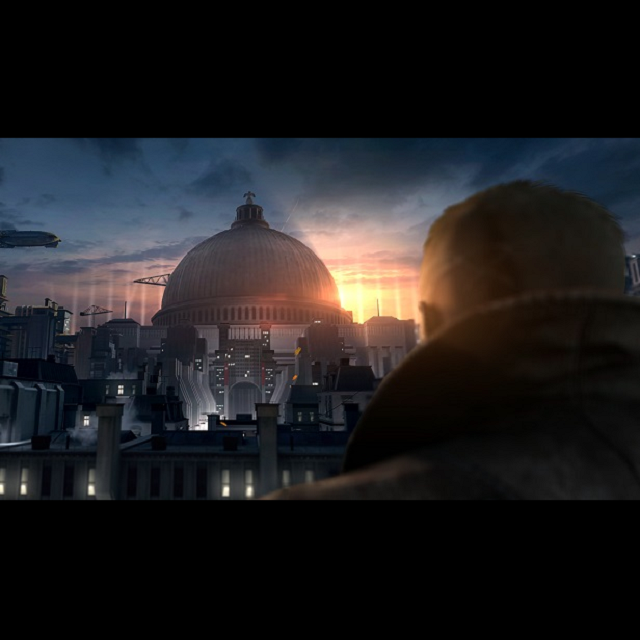
Fourteen years is a lifetime, and it made the ominous world-building a lot easier to take in. They say history is written by the victors, and the Third Reich didn't pull any stops in the New Order. This was heavily reflected upon on the game's portrayal of London, which has been torn down and rebuilt in the image of its new masters. Many of us who've had even a passing interest in world history would immediately recognize the looming feeling of oppression as Blazkowicz traversed the concrete landscape, adorned by the all too familiar red, black and gray color scheme of the enemy.

Perhaps most symbolic of this was the London Nautica, a massive research facility which served as a major setpiece and was deeply symbolic of the Reich whose unchallenged might threatened to sap the hope out of a subjugated free world.

The things I've seen in this life. Strange shit that churns your stomach. Turns your hair white. I've seen a thousand battles. I've seen the sun set on five different continents. I've seen dust rise off the surface of the moon. But all I want is to see you again.

Thus, hope was implied to be a scarce commodity in The New Order's world. Amidst the gore and the explosions, it's easy to miss the fact that the resistance (called the Kreisau Circle) was not attempting to topple the Reich but rather sought to merely take out a small part of it. They were more driven by a personal vendetta against Totenkopf, rather than good intentions, with most of everything else playing second fiddle.

With that being said, MachineGames provided ample commentary on the Nazi's ideologies. We are shown characters broken by the war, as well as unfortunate victims of their regime's crimes against humanity.

Set Roth, the Jewish scholar who was a member of the Da'at Yichud, summed it up pretty well. He said that human faith and reason should be accompanied by doubt when they seek enlightenment. He added that the Reich was the product of a society founded on the notion of absolute certainty and unquestioned conviction. He kept doubts in his beliefs and posited that if their situation was a test from the heavens, then humanity was failing gloriously.

I still wonder whether he was talking to the protagonist, or to us.

It's agony to dream like this and wake up to reality. Sometimes, true, it's good to remember what you're fighting for.

With everything said, I believe Wolfenstein: The New Order is not just an excellent game, but a rather gripping story told with memorable characters. The Second World War has been the subject of countless games for a very long time, and The New Order somehow manages to stand out above the rest without trying to enter an already bloated multiplayer market.

Twenty years, and Blazkowicz is alive and well.

Wednesday, April 23, 2014

The Cave

The Seven
"I have a really interesting story to tell you this evening. So pay attention. It's a story of seven people and a glimpse into a dark place in each of their hearts.

But be careful before you judge, there is a dark place in your heart as well. Someday you will find yourself descending my depths in search of what you desire, and you might not like what you find either.

But enough about you. This is about them."
- The Cave

Friedrich Nietzsche once wrote that when one gazes into the abyss for long enough, they would find it staring back into them. Variations of this idea have resonated throughout a lot of mediums over the decades, from novels to comic books to movies that imply that a dark and terrible side exists within every person. I guess there must be some truth to this, given the popularity of a concept that is as old as mankind itself.

Such is the theme behind Ron Gilbert's The Cave, a platformer-puzzler set in a similar vein to another one of his oldest point-and-click adventure games - Maniac Mansion. The similarities, however, end at the genre because unlike his 1987 classic, The Cave is a dark comedy narrated by the titular Cave, a sentient being that claims to have the ability to show its explorers the deepest desires of their hearts.

From a pool of seven playable characters, with each one harboring their own personal motives for braving the ominous cavern, the player chooses a party of three per playthrough to enter the Cave and uncover its secrets. Together they must cooperatively traverse the labyrinthine depths of the Cave, lending their unique abilities to solve puzzles and defeat the trials set before them.

For a game with such alluring visuals, The Cave is a surprisingly dark game. Each one of the seven characters seem to have a sentence to serve for previous sins, and the supernatural caverns act as their purgatory (or in some cases, their personal hells). With the Cave being the sole narrator of the game, each character has a personal section that echoes the reasons for their journey. Furthermore, cave paintings are scattered throughout the playthrough which help flesh out each character's backstories, and I'd recommend finding them all to enhance what little, albeit effective, storytelling that the writers of the game have employed.

I highly recommend this game, most especially for its unusual stories. There is no moral ambiguity in this title. Instead, players are offered a glimpse straight into the dark side of humanity and are given the chance to reflect on what it may mean for themselves.

I got my copy via the Humble Mobile Bundle 5, which expires a week after this article is published. I'd recommend this method because Bundles are always worth it given the premium quality of the games that they offer (and you'll also help indie developers and charities to boot).

Otherwise, the game is also available on Google Play.

Sunday, March 02, 2014

Week 9 - First of Summer

Nearly sixteen years ago, I beat Pokemon Red in a single playthrough. The GameBoy cartridge's battery power was dead which meant that saving wasn't going to work anymore, and I wanted to give the game one last shot. Using a pair of fresh Duracell batteries, I beat the game (capturing Mewtwo included) in a little over ten hours. Suffice to say, it was nowhere near record time but it was my first taste of a speedrun.

Fast forward to two weeks ago, an anonymous person set up one of the most interesting social experiments so far that faintly invokes the infinite monkey theorem. A Twitch channel was set up and hooked to a game of Pokemon Red. Button input was gathered from chat and was translated into ingame commands in an attempt to do the seemingly impossible: complete a single playthrough of the game. Nearly four hundred hours later, Zapdos hit Red's Blastoise with a Thundershock and history was made. While the 650,000-person effort was hardly the first of its kind, this achievement was done in a game that was more chaotic by several orders of magnitude. Bravo, humanity!

Meanwhile, I snagged a copy of the reprint for Gerry Alanguilan's Where Bold Stars Go To Die from Comic Odyssey at the Galleria. I wasn't expecting to get anything else, but they somehow had a few copies of one of his earlier works which I have been trying to find for over a decade - Wasted. While a lot of his work (besides the ones done for DC and Marvel comics) are already dark and geared towards mature audiences, the ones I got took them a notch further. In any case, it was definitely a good score. Hopefully, we get to go to this year's Komikon - I've been meaning to go for the past couple of years or so.

Lastly, it feels like summer's here. We went to our cousin's place in Cavite last weekend for an impromptu gathering and a swim (which turned out to be a quick one). Needless to say, I hate the sun.

Later!

Wednesday, February 26, 2014

Injustice: Gods Among Us

Tie-in games have historically been an iffy bunch. Usually they just exist to milk the last cents out of the customer's money.

Injustice: Gods Among Us strives to be different, which is a pleasant surprise. As a tie-in game to the Playstation 3 and 4 titles of the same name, the mobile game serves as a light version of the fighting games.

Essentially, the mobile version is a card game wrapped in a three-versus-three fighting game shell. Players grind for credits which they can use to buy booster packs, with each one containing playable characters as well as cards that enhance their powers. The game borrows characters from all over the DC multiverse. Some of the more popular characters, like Batman and Superman, have several versions who possess different abilities and appearances.

Combat is simple and intuitive, with taps corresponding to light attacks while swipes generate heavier moves. Each character has three special moves, which deal a lot more damage and try to impress the player with flashy graphics. Luckily, this does not make the higher levels of the game trivial and boring. The AI isn't too smart, but it will punish players if they become too careless.

The game itself is massive (at over 1GB), but it goes without saying that the graphics are nothing short of fantastic for a free mobile title.

What makes the game worth playing is that the developers continually release challenges which allow players to collect otherwise new and unobtainable characters, like Scorpion (of Mortal Kombat fame) and Darkseid (who isn't available in the console versions). While the game has in-app purchases, nothing is hidden behind a paywall - players can earn everything with a reasonable amount of effort and have fun while doing it.

Unlocking goodies for the console version (and vice versa) is merely icing on the cake. If anything, the mobile game has made me want to the the console version.

Get Injustice: Gods among Us if it's something that interests you. It's available on Google Play and iOS.

Tuesday, February 11, 2014

Week 6 - Life in the Stillness

"The sea can bind us to her many moods, whispering to us by the subtle token of a shadow or a gleam upon the waves, and hinting in these ways of her mournfulness or rejoicing. Always she is remembering old things, and these memories, though we may not grasp them, are imparted to us, so that we share her gaiety or remorse."
- H.P. Lovecraft

Ah jeez. What an incredibly late post. I've been feeling a little woozy for the past few days.

I'm on a trip to Kalinga this week. I hope that would be fun. Can't say I'm not nervous though, for more reasons than I care to share. Haha!

In other news, a terrible thing has happened last week. Aside from the loss of the brilliant, albeit eccentric, personality Arvin 'Tado' Jimenez, among the dead were artists, musicians and young travelers who were - as the article suggests - living their dreams. Peace to the bereaved - the world is a darker place with the loss of such free souls.

Meanwhile, I'm done with ascending in Kingdom of Loathing for the foreseeable future. The Sea Quest, worth thirteen ascensions' worth of awesome, culminated in a battle with Dad Sea Monkee. It contains some of Jick's best written work yet - and I have the battle logs saved and will post them relatively soon-ish.

Lastly, we got to visit Manila Ocean Park last weekend. While it's obviously not as cool as seeing the real things in the wild, there's always something about the sea that seems so inherently peaceful - despite the fact that we often fall to its mercy whenever we leave the protection of terra firma. Nonetheless, the experience is a steal for that price, although I'd prefer it if we were able to visit during the field trip off-season. I guess that's something to take note of later on.

If there's anything that annoyed me during the visit, it's those folks who insisted on using flash photography despite the reminders and the signs that asked them to do otherwise. One does not even need to be aware of the fact that some marine animals are highly photosensitive to follow simple rules. It's a reflection of the lines that some people are willing to cross in the name of vanity, which is, quite frankly, quite alarmingly stupid.

Simple rules, and some people don't even bother. Anyway, the photos, as always, are available after the jump.

Enjoy!

Wednesday, January 22, 2014

Overthinking - Indie Game: The Movie

"My whole career has been me, trying to find new ways to communicate with people, because I desperately want to communicate with people, but I don't want the messy interaction of having to make friends and talk to people, because I probably don't like them."
- Edmund McMillen

I've had the pleasure of watching Indie Game: The Movie recently. It's a documentary that gives viewers an inside look on how indie games are made. What's interesting about the film was that it gave less attention to the technical aspects of the industry, but instead focused on showing the less visible aspects of development - the visions, struggles and personalities of the people behind the game. It focused on three massively popular games (namely Braid, Super Meat Boy and Fez) and how making games that the creators invested a great deal of personal effort into made it different from the games churned out by game studio giants and their mainstream titles.

I think it's painful to watch, and that's because it hit a little too close to home.

I think that this documentary should not only be watched by those in the gaming industry nor just by gamers themselves, but also anyone who has ever had (or still has) an interest in creating their own content, in whatever form it may be.

Seeing the sacrifices, heartbreak, depression and that finality of releasing their creation to the world is something that should remind us that the people behind the flashy things we take for granted are human just like us - and that their struggle to express and encapsulate their dreams into a tangible form for the rest world to enjoy is nothing short of superhuman.

I think each game's story had something to point out in the personal lives of each viewer - and in turn made it resonate on a personal level. Super Meat Boy's development story made me question what I've done to retain or even realize the far-cried dreams I've had when I was younger. Fez's story was a reflection of refusing to compromise one's vision for the expectations of others even in the face of ridicule and lack of confidence. Lastly, Braid's story was that of hope - that there is always someting of value to find if one keeps looking for it long enough.

Overall, it's a very interesting film. It's one of those things that should have no business in making one reflect on the personal workings of their own lives, but it gets the job done by invoking eerily relatable aspects of our personal lives.

Wednesday, January 15, 2014

Heroes of Dragon Age

Dragon Age is a franchise that has played its part in defining the high point of the past generation of games. While Dragon Age 2 came up short on so many levels, Origins paved the way for excellent games to follow in its wake, such as the Mass Effect series.

Due to some unfortunate events, I could somehow no longer install Blood Brothers on my Droid so I looked for an alternative and found Heroes of Dragon Age.

The game, unsurprisingly, is of similar concept to most of the card-collecting RPGs that seem to float around these days. I'm guessing that the game's main selling point is the fact that it rides on the coattails of the revered franchise and borrows characters from all over the Dragon Age universe.

As is often the case with these types of games, progression is notoriously difficult and is heavily dictated by purchasing packs of heroes. If there's one redeeming factor for the game, it's the fact that players have a chance (even if it is miniscule) to obtain even the rarest of units - without exceptions - if they embrace the grind. In-app purchases exist to serve as shortcuts for those with more dispensable income, but aren't required for the most part.

With regards to gameplay, Heroes of Dragon Age seems to still be on its early stages. Quests and PvP fights could be performed to obtain gold as well as experience, and both of these activities are limited by the amount of energy and stamina that the player accumulates. Typical gameplay lasts for ten to fifteen minutes on average, with around two hours to wait while they replenish. Barebones as it is, I think the game holds a lot of potential given the experience of its backers - although it's EA, so don't be surprised of any strange behaviour.

Heroes of Dragon Age is available for both Android and iOS. Give it a try if the series is your cup of tea. With Dragon Age: Inquisition coming out soon, I'm guessing it's best to start playing early.

Wednesday, January 08, 2014

Quadropus Rampage

I have a tenuous relationship with roguelike games. As a matter of fact, I've only played a couple to completion - Azure Dreams (which was relatively easy due to being built for the Gameboy Color, a kid-friendly system) and Shiren the Wanderer - which I barely beat before ragequitting out of sheer frustration (and loss of equipment earned over hours of play).

Hence, I didn't expect Quadropus Rampage to be anything much. After all, it's a free game for the Android platform from a relatively unknown developer.

It's amazing to see what people can do when they care about the game first and think about profits as a distant afterthought.

Quadropous Rampage is a roguelike brawler that features Tack (a four limbed octopus who wields things like tennis rackets and chopsticks) and his pet starfish Bingo as they try to make their way into the deep abyss against hordes of creatures to defeat Pete, the God of the Sea. It goes without saying that the deeper Tack dives, the more difficult things are and it is inevitable for him to meet his demise at some point. Luckily, upgrades are available for orbs collected by slaying enemies - and they can be used to upgrade different abilities like speed and special moves as well as purchase additional pets to aid him in his quest.

While it may sound relatively simple, there are a few other things to keep in mind that would help turn the tide to Tack's advantage (since the game becomes really difficult at some points). Masteries are tasks that are completed over the course of gameplay, and achieving them grants access to one of two available perks with provide changes to how the hero fights the creatures of the deep. Artifacts, which grant even more abilities to those who manage to acquire them, can be bought from the game's vendor (whose name I forget) or found randomly during the journey.

There's an awful lot to do, and four different game modes would keep even most players occupied. In-app purchases exist to help in gaining access to the unlockables (which could be obtained by regular gameplay. Personally, I don't mind the grind to earn them, as it definitely helps to hone the finer points of battle - and shortcuts in games like these would only go so far.

This shouldn't be free, but it is - and it's awesome. Get Quadropus Rampage from Google Play now!